Look across the rooftops of almost any Phoenix neighborhood and you will spot them: short round caps poking up through the tile or shingles, often a few feet from the plumbing vents. A lot of those are dryer vents. In a great many Valley homes, the dryer does not vent out a side wall at all. It sends its hot, damp, lint-filled air straight up through the attic and out the roof.
That arrangement works, but it comes with its own set of problems that side-wall vents mostly avoid. Here is why so many Phoenix dryers end up venting through the roof, what that means for how well your dryer runs, and what to watch for.
Why the dryer vent ends up on the roof
Where a dryer vents usually comes down to where the laundry room sits. When the laundry is on an outside wall, the vent can run a short distance straight outside. But in many Phoenix floor plans the laundry room sits toward the middle of the house, in a hallway closet or off the garage, with no outside wall nearby.
In those homes the simplest route out is up. The vent runs from the back of the dryer into the attic and then through the roof. Single-story homes with laundry near the center of the house end up with this layout often, and plenty of two-story homes do too.
Lint has to climb the whole way up
A dryer’s blower pushes air and lint through the vent. On a side-wall vent that air moves a short, mostly level distance and out. On a roof vent it has to climb, sometimes a long way, before it can escape.
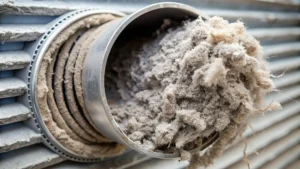
Over time that fallen lint builds up. It narrows the vent, which slows the airflow, which lets even more lint settle. It is a slow cycle, and it is the main reason roof vents tend to clog faster than short side-wall vents.
The cap on the roof matters more than people think
Every roof vent ends in a cap, and the cap is one of the most common places for trouble to start.
Screens trap lint
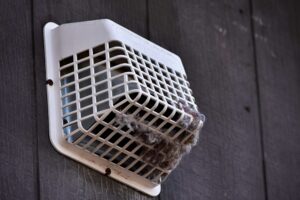
Some roof caps are fitted with screens, often to keep birds out. The problem is that a screen catches lint as well as it catches birds. Lint collects on the screen until it blocks the opening, and building codes generally do not allow screens on dryer exhaust terminations for exactly that reason.
Flaps that stick
Many caps use a flap or damper that is meant to open when the dryer runs and close when it stops. Lint and dust can make that flap stick, either partly closed, which blocks airflow, or open, which lets pests and debris in.
Caps on tile roofs
Tile roofs are everywhere in the Valley, and a vent cap on a tile roof can be harder to reach and inspect safely than one on a flat or shingle roof. That is one more reason these caps go unchecked for years.
Birds and pests like roof vents
A warm roof vent with a little lint inside is an inviting place for birds to nest, especially in spring. A nest can block a vent completely. If you have heard scratching or chirping near your laundry room, or noticed birds going in and out of a cap on your roof, it is worth having it checked. We wrote more about this in our post on birds and rodents in Phoenix dryer vents.
A nest also holds lint and moisture, which makes the blockage worse over time and can draw insects.
Monsoon storms and roof caps
Monsoon season brings high winds that carry dust and debris across the roof. A roof vent cap is right in the path of all of it. Storms can push debris into a cap, damage a flap or loosen a cap that was already worn. After a rough monsoon season, a roof vent is worth a look even if the dryer seems to be running normally.
Dust storms are a particular problem. The fine grit they carry can combine with lint near the top of the vent and make buildup at the cap worse.
Signs a roof vent is struggling
The warning signs are similar to any clogged dryer vent. Your dryer takes longer than it used to, or needs a second cycle to finish a load. The lint trap fills up faster than it used to. The laundry room gets hot while the dryer is running, and clothes come out hotter than normal but still damp.
If you can safely see the cap from the ground, a cap covered in lint or a flap that never seems to move when the dryer is on are also strong signs something is restricting the flow.
A burning smell near the laundry room, or a dryer that shuts itself off partway through a cycle, are signs to stop using the dryer and have the vent checked promptly, since both can mean heat is building up where it should not.
Why roof vents need cleaning more often
Because lint falls back down a roof vent and because the cap can collect debris, roof-vented dryers generally benefit from more frequent cleaning than a short side-wall vent. Homes with large families, frequent laundry, long vent runs, multiple bends or roof exits may need more frequent cleaning than once a year, and a roof vent left too long can let a lot build up.
If you do a lot of laundry, or your home has a long run through the attic before it reaches the roof, it makes sense to have the vent checked at least once a year.
What cleaning a roof vent involves
Roof-vented and more complex dryer vents take more planning than a short side-wall vent. Long runs, roof exits and multiple bends may require specialized tools, additional access or more time, so it helps to mention a roof vent when you book.
The whole run, not just the part you can see
Cleaning a roof vent means clearing the entire line, from the back of the dryer through any bends in the attic up to the cap, not just the few feet visible behind the machine. The lint that has fallen back down the pipe is exactly what a quick cleaning at the dryer end misses.
The cap and the connection
The cap on the roof and the connection at the back of the dryer both need checking, since both are common trouble spots. A cap blocked with lint or a loose connection behind the machine can undo an otherwise thorough cleaning.
Proof on video
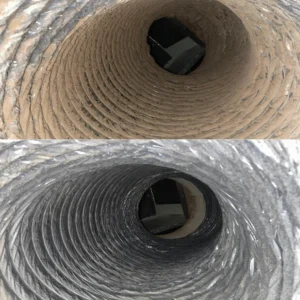
You receive before and after video, so you can see what came out of a vent you would otherwise never see inside.
When the vent needs repair or replacement
Roof vents sometimes need more than cleaning. A line that has come apart in the attic, a crushed section, or a cap that is damaged or fitted with the wrong kind of screen may need to be repaired or replaced. If we find that, we will show you and explain your options. Our dryer vent repair and replacement page covers when that is the right call.
Moving the vent to a wall is not always possible
Homeowners sometimes ask whether they can simply reroute a roof vent out a side wall to avoid these problems. In some homes that is an option, particularly when the laundry room is close to an outside wall. In many Phoenix floor plans it is not practical, because the laundry sits too far from any exterior wall for a side vent to work within a sensible distance. For most roof-vented homes, keeping the existing vent clean and in good repair is the realistic answer.
What you can do between cleanings
A few simple habits help a roof vent stay clear longer. Clean the lint trap before every load, not just when it looks full. Avoid overloading the dryer, since a packed drum pushes more lint into the vent and dries clothes more slowly. And pay attention to how long loads take, because a gradual increase in drying time is usually the first sign the vent is starting to restrict.
What you should not do is try to reach a roof vent cap yourself, especially on a tile roof. Tiles crack easily underfoot, roofs get dangerously hot through much of the year, and a fall from a roof is a serious risk for anyone. Checking the cap from the ground is fine. Climbing up to clear it is a job best left to someone with the right equipment.
Home inspections often flag roof vents
If you are buying or selling a home, dryer vents are a common item on inspection reports, and roof vents with screened caps or long neglected runs come up often. Our post on dryer vent code violations Phoenix home inspectors find goes into more detail.
What it costs
Our dryer vent cleaning starts at $99. If your vent is fully clogged, our clog removal service starts at $199. We tell you the price before any work begins.
We know Phoenix
We are family owned and have cleaned dryer vents and air ducts across the Phoenix Valley since 2015. We are BBB accredited, we hold a 4.6 star rating across more than 640 Google reviews, every job carries a one year warranty, and we answer the phone 24 hours a day.
If your dryer vents through the roof and it has been a while, call us at (623) 200-4222 or book a visit online. We will check the whole run and show you what we find.