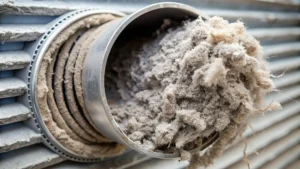
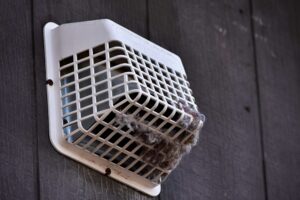
A dryer vent hood is a hole in the side of your house with a plastic flap over it. It is warm, it is sheltered, it is dark, and it points into a soft insulated tube. If you were a bird looking for somewhere to build, you would take it.
They do. Constantly. And in Phoenix the list of things that move in is longer than birds.
Why this is worse here than most places
Two reasons, and they compound.
The first is that our building stock favors it. Sidewall dryer vents at accessible heights are extremely common in Phoenix single-family homes, and the standard louvered plastic hood is easy for a determined bird to work past and easy for a rodent to chew.
The second is roof rats. They are established across the metro, they are excellent climbers, and they are actively looking for warm sheltered cavities. A dryer duct is a warm sheltered cavity. Attic ductwork is another, which is why the two problems often show up in the same house.
Add to that the seasonal homes standing empty for months, and you have a lot of undisturbed vents in a city with a healthy pest population.
What actually moves in
Birds
House sparrows and finches are the usual ones. They build in the hood itself and sometimes several feet up the duct, and the nest is dry grass and twigs packed against a surface that gets hot and carries lint.
Nesting season is spring, which is also when people stop noticing their dryer because they are not running heavy loads of winter bedding.
Rodents
Roof rats and mice get in through a damaged flap or by chewing. Unlike birds they keep going, and a rodent that gets into the dryer duct is a short step from getting into the wall cavity or the attic.
They also leave droppings and urine in the duct, which is a contamination problem on top of an airflow problem.
Insects
Wasps and bees build in vent hoods regularly here. It is less of a fire issue and more of a hazard when someone finally goes to clear it without knowing what is in there.
The compounding risk: a nest is not just an obstruction. It is dry combustible material sitting inside a duct that is designed to carry heat and lint. Blocked airflow makes the dryer run hotter, and hotter air is moving past a pile of dry grass. That is the specific combination that turns a nuisance into a fire.
How you find out, usually too late
Almost nobody discovers this by looking. They discover it because the dryer stopped working properly.
The tell is a load that used to dry in one cycle and now takes two. People adapt to that gradually and stop noticing it is abnormal. Other signs are the laundry room getting unusually hot and humid, clothes coming out hot but still damp, a burning smell, or the dryer shutting itself off partway through on a thermal cutoff.
Occasionally people hear it. Scratching or chirping from the wall near the laundry room is not subtle once you know what it is.
And sometimes the first sign is simply that the exterior flap no longer closes, because something is holding it open.
What to do if you suspect it
Stop running the dryer. This is the one piece of advice on this page that is not negotiable. Running a dryer against a blocked vent is what turns this into an incident.
Go outside and look at the hood. You will often see nesting material at the opening, or a flap propped open, or staining.
Do not reach in. Between wasps, rodents, and sharp duct edges, this is not a good place to put your hand blind.
If it is nesting season and there are birds actively using it, be aware there may be legal protections around active nests with young for certain species, and it is worth asking rather than assuming. A wildlife control company can tell you where you stand.
Clearing it properly
Removal is only half of it. The duct then needs to be cleaned along its whole run, because nesting material breaks up and travels, and because the lint that accumulated behind the blockage is still in there.
The hood usually needs replacing rather than reinstalling, because whatever got in did so through a hood that failed at its one job. The better replacement is a metal hood with a proper damper rather than the standard plastic louver.
Never install a screen or mesh over a dryer vent. It seems like the obvious fix and it is the wrong one. Lint packs against mesh almost immediately and you have created the exact blockage you were trying to prevent. A damper hood keeps animals out while letting lint pass.
If the duct itself was chewed or damaged, that section needs replacing. Our dryer vent repair and replacement page covers what that involves, and the routine clearing is under dryer vent cleaning.
Keeping it from happening again
Check the hood twice a year, spring and fall. It takes thirty seconds and it is the single highest-value thing on this list.
Run the dryer and confirm the flap opens with airflow and falls shut when it stops. A flap that hangs open is an open door.
Replace a cracked or missing louver immediately rather than adding it to a list. If your house sits empty seasonally, deal with the vent before you leave rather than after you return.
And if you have had roof rats in the attic, assume the dryer vent is on their route and check it, because the two problems travel together more often than not.
What it costs you before it ever becomes a fire
Fire is the reason this matters most, but it is not the only cost and it is not the most common one.
A restricted vent means every load runs longer. In a household doing five or six loads a week, a dryer running two cycles instead of one is a meaningful line on a Phoenix summer power bill, and it is invisible because it happens gradually.
It also shortens the life of the appliance. Dryers have thermal cutoffs that trip when the machine overheats, and a machine tripping its cutoff repeatedly is a machine being asked to operate outside its design. Heating elements and thermostats fail early under that pattern.
And it damages clothes. Fabric held at high heat for double the intended time wears faster, which is the kind of cost nobody attributes to the actual cause.
New builds are not exempt
People assume this is an old-house problem. It is not.
A new home has a brand new dryer vent hood with a brand new plastic flap, installed at a comfortable height on an exterior wall, in a neighborhood that is often still under construction with disturbed ground and displaced wildlife.
We have found nests in vents on houses less than two years old. The vent does not care how old the house is. It cares that it is warm and sheltered.
The seasonal pattern to watch
Spring is nesting season, and it is when birds go looking. If you are going to check once a year, check in March or April.
Late summer into fall is when rodent activity picks up as temperatures start to drop and things look for warmer places to be. That is the second window.
If you only remember one, make it spring, because an active bird nest built in March and left alone becomes a fully packed duct by June, right as you start running the AC hard and paying attention to your power bill for other reasons.
If you rent, or if you own rentals
Tenants almost never report a slow dryer. They run it twice and get on with their day, and the landlord finds out when something else goes wrong.
If you rent, tell your landlord about a dryer taking two cycles. It is not a complaint about laundry, it is a maintenance issue in their building, and most owners would rather hear it early.
If you own rentals, put an annual exterior vent hood check on your list. It costs almost nothing, and it is the item on any duct-related maintenance list with the highest consequence if it is skipped.
The thirty second version
Go outside. Look at the dryer vent hood on the side of your house. If there is grass sticking out of it, if the flap is propped open, or if you cannot remember the last time you looked at it, that is your answer.
Everything else on this page is detail. That is the whole check, and almost nobody does it.
Who to call, and for what
If something is actively living in the vent right now, that is a wildlife or pest problem first. Get the animal handled before anyone starts pulling material out of a duct.
Once it is gone, the vent line itself needs clearing along its full length and the hood almost certainly needs replacing. That is the part we handle, and it is worth doing in one visit rather than clearing the blockage and leaving the same failed hood in place for next spring.
The Unmatched $499 Complete-System Clean
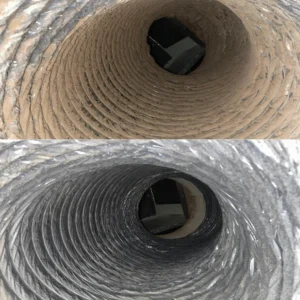
For $499, one HVAC system cleaned end to end: the supply ducts, the returns, every register, the air handler, the blower, the accessible coil and the dryer vent, every component brushed, vacuumed and disinfected, with before-and-after video so you see exactly what is going on inside. Nothing is due up front.