Most people first hear about UV air purification from an HVAC tech standing in their hallway, and the pitch usually arrives with a number attached. Kills 99 percent of something. Before you spend the money, it helps to know what these systems genuinely do, what they do not do, and why a Phoenix house is a different case than a house in Portland.
What the light is actually pointed at
There are two different products sold under the same name, and they solve different problems.
The first is a coil sterilization lamp. It mounts inside your air handler and shines continuously on the evaporator coil and the drain pan. It is not treating the air moving past it. It is treating the metal.
The second is an air sterilization system, installed in the ductwork itself, meant to treat air as it passes through. Air moves fast through a duct. Contact time is short. These systems have to be sized and placed carefully to do anything meaningful, and a cheap one installed in the wrong spot is mostly a light bulb in a metal box.
When a Phoenix contractor quotes you UV, ask which one they mean. The answer changes the value.
Why the coil is the real target here
Your evaporator coil is cold and wet whenever the system runs. In Phoenix that is most of the year. Humidity condenses on it, water collects in the drain pan, and organic material that got past the filter settles into that moisture.
That is a growth environment. Not because your house is dirty, but because that is what cold wet metal does in a warm climate.
What grows there is called biofilm. It coats the coil fins, it restricts airflow, and it can produce the musty smell that shows up when the AC kicks on. A coil lamp keeps that surface from developing biofilm in the first place. That is a real, narrow, useful job.
Worth understanding: a UV lamp prevents growth on the surface it illuminates. It does not reach into your ductwork, it does not remove dust that is already there, and it does not clean a coil that is already fouled. Sterilizing dirt does not remove dirt.
What UV does not do, no matter what the brochure says
It does not filter. Dust, dander, pollen, and construction fines are physical particles. Light does not remove particles from air. Your filter does that, and a UV system is not a reason to buy a cheaper filter.
It does not sterilize the room you are sitting in. Air that passes the lamp gets a brief exposure, then mixes with all the untreated air in your house. Anyone selling whole-home sterilization is describing something the equipment cannot deliver.
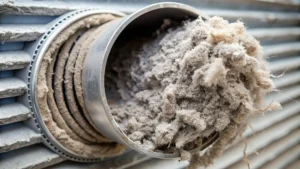
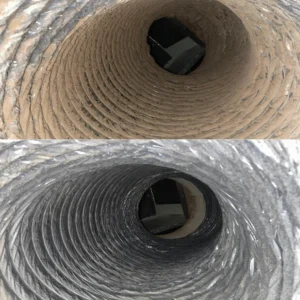
It does not substitute for cleaning. If your ducts already carry a decade of settled material, adding a lamp does nothing about it. The two are separate jobs. One prevents future growth on a coil, the other removes what has already accumulated.
We would rather tell you that before you buy than after.
The Phoenix case for it
Here is where it gets genuinely useful locally. Your air conditioner runs for the better part of eight months. That means the coil stays cold and wet for a huge portion of the year, and the drain pan rarely gets a long dry stretch to reset.
In a climate where the AC runs three months a year, a coil gets long dry periods that limit growth on their own. A Phoenix coil does not get that break. If a coil lamp makes sense anywhere, it makes sense in a house whose system runs from March through October.
The other local factor is dust load. Our air carries fine mineral dust that a standard filter does not fully stop, and some of it lands on that wet coil. More organic and inorganic material on a permanently damp surface is more to feed growth.
Bulbs degrade, and nobody mentions it
A UV-C lamp does not burn out the way a household bulb does. It keeps glowing while its output drops below the level that does anything useful. You look at it, you see blue light, and you assume it is working.
Most lamps need replacing roughly once a year. If yours was installed four years ago and has never been touched, you likely have a decorative light in your air handler. That is the single most common thing we find with UV systems in the field.
If you have one, find out when the bulb was last changed. If nobody knows, it is due.
Who should actually consider it
It is a reasonable purchase if you get a recurring musty smell when the system starts, if your coil has been cleaned before and fouled again quickly, if anyone in the house is immune compromised and your doctor has raised indoor air, or if your system has a history of drain pan problems.
It is a poor purchase if it is being sold as a replacement for cleaning, if the pitch includes curing allergies, or if it is bundled into a large quote where nobody can tell you which type of system you are getting.
How this fits with the rest of the system
The order that makes sense is straightforward. Clean what is already dirty first. See the condition of your ducts and coil with your own eyes. Then decide whether prevention is worth adding.
Buying a prevention device for a system that is already fouled is paying to preserve the current state. Get it clean, look at it, then decide.
If you want to know what shape your system is in before spending anything, that is what our air duct cleaning visit is built around. You watch the video, you see the coil and the interior of the ducts, and then the conversation about add-ons is based on something real rather than a sales sheet. If you decide UV makes sense afterward, our UV air purification page covers the install.
The short version
UV is a narrow tool that does one job well. It keeps biofilm from forming on a cold wet coil, which in Phoenix is a coil that stays cold and wet most of the year. That is worth something.
It is not a filter, not a room sterilizer, and not a replacement for cleaning ducts that already need it. Anyone telling you otherwise is selling past what the equipment does.
What installation actually involves
A coil lamp is a small job. A technician opens the air handler, mounts the fixture so the lamp faces the coil surface, runs power, and closes it up. An hour is typical. There is no ductwork modification and nothing changes about how your system operates.
An in-duct air system is more involved because it has to be cut into the supply plenum and positioned where air actually passes it. That is where installs go wrong. A lamp mounted in a spot with poor air contact is a lamp doing very little, and you would never know from looking at it.
Neither type requires you to change filters differently, run the system differently, or do anything as the homeowner beyond replacing the bulb on schedule.
Questions worth asking before you sign anything
If someone quotes you UV, these five questions separate a real recommendation from a line item added to pad a ticket.
Which type is this, coil or in-duct? If the person selling it cannot answer cleanly, that is your answer about how well it will be installed.
Where exactly is it mounting? For a coil lamp, it should face the coil. For in-duct, it should sit where air genuinely passes it, not tucked wherever there was room.
How often does the bulb need replacing, and what does a replacement cost? This is an ongoing expense, not a one-time purchase. Know the number now.
Have you seen the inside of my system? A recommendation made without looking at your actual coil is a product pitch, not a diagnosis.
What specifically will this fix in my house? If the answer is a general claim about air quality rather than something specific to your system, be skeptical.
The honest limits of the research
UV-C light is genuinely effective at disrupting microorganisms. That is established and not controversial. The gap between that fact and the claims on a sales sheet is where homeowners get misled.
Laboratory effectiveness assumes controlled exposure time at a known distance and intensity. A residential duct with air moving through it at speed is not that environment. Coil sterilization holds up better than air sterilization for exactly this reason, because the coil sits still under continuous exposure instead of rushing past in a fraction of a second.
You will also see claims about specific pathogens. Treat those the way you would treat any lab result applied to a house. The mechanism is real. The conditions are not the same.
What we can say plainly is this. If your coil grows biofilm and smells musty, a properly installed and maintained coil lamp addresses that. If you want cleaner air generally, filtration and removing accumulated debris will do more for you than any lamp.
The Unmatched $499 Complete-System Clean
For $499, one HVAC system cleaned end to end: the supply ducts, the returns, every register, the air handler, the blower, the accessible coil and the dryer vent, every component brushed, vacuumed and disinfected, with before-and-after video so you see exactly what is going on inside. Nothing is due up front.