You lock up in April, drive back to Minnesota or Alberta or wherever home is the rest of the year, and the Phoenix house sits. Six months later you come back, walk in, and the place smells closed up. Everybody notices it. Most people open a window, run the AC hard for a day, and forget about it.
That smell is information, and the system that produced it has been sitting in one of the harshest environments a building can offer.
What happens to a closed house here
A vacant Phoenix home in summer is not simply an empty house. Attic temperatures climb well past what anyone would tolerate, the building materials bake, and whatever is inside the ductwork bakes with them.
If the thermostat is set high or off entirely, the system barely runs. That sounds harmless. It creates two specific problems.
The first is stagnation. Air that never moves lets everything settle. Dust that would normally stay partly suspended and get caught by a filter instead drops onto duct interiors and stays there for months.
The second is moisture behavior. On the rare occasions the system does kick on, the coil goes cold and wet, and then it sits without the regular cycling that would normally dry it out. Wet metal sitting still in a hot house is the setup for exactly the musty smell you notice in October.
The pest problem nobody warns you about
An empty house is quiet, and quiet houses attract things. Roof rats are established across the Phoenix metro, and they get into attics readily.
Attic ductwork is soft flex duct with insulation around it. That is a good nesting material and an easy thing to chew. We find damaged flex runs on returning-snowbird homes more often than on year-round houses, and the damage was done during months nobody was there to hear it.
A chewed duct is not just an air leak. It is a direct path from the attic into your supply air, delivering attic dust, insulation fibers, and whatever else is up there straight to your bedrooms.
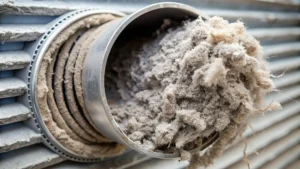
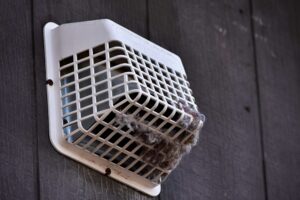
Dryer vents are worse, because the exterior hood is a hole in your wall with a flap on it. Birds nest in them. Rodents get into them. A vent that ran fine in April can be blocked by October, and the first sign is usually a dryer that stops drying.
If you are heading out for the season: the two things most worth doing are covering or checking the dryer vent hood and setting the thermostat to run periodically rather than shutting it off. A system that cycles occasionally keeps the coil drying out and keeps some air moving.
What to do before you leave
Put a fresh filter in. A loaded filter sitting for six months is a bad starting point and costs almost nothing to avoid.
Set the thermostat somewhere sensible rather than off. Many people here land somewhere in the mid to high eighties for a vacant house. The goal is not comfort, it is keeping the system cycling and keeping indoor humidity from doing anything strange.
Run the dryer empty for a few minutes and confirm the exterior flap opens and closes. A flap stuck open is an invitation.
Close interior doors or leave them all open, but be consistent, and do not close supply vents in unused rooms thinking you are saving money. Closing vents raises static pressure in the system and does not reduce runtime the way people expect.
What to do when you get back
Before you settle in, change the filter again. Whatever went in before you left has had six months to load up.
Then run the system and pay attention to what you smell in the first few minutes. A brief dusty smell that fades is normal. A musty or sour smell that persists usually means something on the coil or in the drain pan.
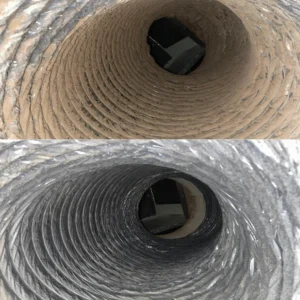
Look at your supply registers. Pull one grille and look inside with a flashlight. You are checking whether there is visible buildup on the interior surfaces of the duct, and whether the insulation looks intact.
Check the dryer vent hood outside before you run a load. If a bird built in there over the summer, running the dryer against a blocked vent is a fire risk, not just an inconvenience.
Why the timing works in your favor
Returning snowbirds arrive in October and November, which happens to be the best window of the year for this work anyway. Monsoon season has just ended, the heavy cooling load is done, and the system is about to go into its easiest months.
Getting it cleaned then means you are not spending your first weeks back breathing six months of settled material, and you go into the season you are actually here for with a system that is clean and working properly.
It is also easier to schedule. Everyone calls in June when the AC struggles. October is quieter.
The part that matters if you rent it out
A lot of seasonal homes here get rented while the owners are away, which changes the picture. You now have turnover, guests with pets, guests who cook differently than you do, and nobody checking on the system between stays.
If your property is rented during your absence, treat the duct system the way you would treat any other turnover item. Once a year at minimum, and pay closer attention to the dryer, because guests overload dryers and nobody reports a slow one.
What we would actually tell you to do
If the house has sat closed for a full Phoenix summer and it has been more than two or three years since anyone cleaned the ducts, get it looked at when you return. Not because every vacant house has a problem, but because the specific combination of heat, stagnation, and pest access makes it more likely here than almost anywhere.
Our visit includes a video inspection, which for a seasonal homeowner is the useful part. You see the inside of your own ducts and the condition of the coil, and you find out whether anything got into the attic runs while you were gone. If it is clean, we tell you it is clean and you have a baseline for next year.
If the dryer line needs attention, our dryer vent cleaning covers it, and if something was chewed or separated up there, repair and replacement is a separate conversation we would rather have with you looking at the footage.
How often a seasonal home actually needs it
There is no universal number, and anyone who gives you one without looking at your house is guessing. What we can give you is the reasoning.
A year-round home with a decent filter, no pets, and a well-sealed attic can go a long stretch without needing anything. A seasonal home has a different risk profile because of the months nobody is watching it. The variables that matter most are whether the attic has had pest activity, whether the ductwork up there is intact, and how long the system sits without cycling.
Practically, most seasonal owners here land on looking at it every two to three years, with a check of the dryer vent annually because that one carries a fire risk rather than a comfort one.
If your house has never been inspected internally, the first look is the valuable one regardless of timing. You find out what you are dealing with, and every decision after that is informed instead of guessed.
What the visit actually looks like
For a seasonal home the sequence is usually the same. Someone runs a camera through the supply and return runs and shows you what is in there, including the attic sections where damage tends to happen. You watch it. Not a still photo from a different house, your ducts.
If cleaning is warranted, the system gets put under negative pressure and the lines are agitated so the material has somewhere to go rather than being pushed further in. The coil and blower get attention, because those are where the efficiency losses live.
Then the dryer line, which for a house that sat empty is the one most likely to have a genuine blockage.
Start to finish it usually runs somewhere between forty five minutes and three hours depending on the size of the system and what is found. If someone quotes you fifteen minutes, they are not doing the job described above.
The smell test, in more detail
Since the closed-up smell is what most returning owners notice first, it is worth knowing what different smells point at.
A dusty smell that clears within ten or fifteen minutes of running the system is usually just settled dust getting stirred and caught. Not a problem.
A musty, damp, basement-like smell that persists is typically biological growth on a coil or standing water in a drain pan. That does not clear on its own and running the system harder will not fix it.
A sharp or acrid smell when the heat runs for the first time in the fall is often dust burning off a heat exchanger, which is normal and brief. If it lasts beyond the first cycle or two, stop and have it checked.
Anything that smells like an animal is exactly what it sounds like, and that is an attic problem before it is a duct problem.
The Unmatched $499 Complete-System Clean
For $499, one HVAC system cleaned end to end: the supply ducts, the returns, every register, the air handler, the blower, the accessible coil and the dryer vent, every component brushed, vacuumed and disinfected, with before-and-after video so you see exactly what is going on inside. Nothing is due up front.