You know the look. The sky goes brown on the eastern horizon in July, the wall of dust rolls in, and an hour later there is a fine grit on the patio table, the car, the window sills. Everything outside gets a coat.
The part people miss is what happened inside while they watched it from the window.
Your house is not sealed
Homes are not airtight, and Phoenix homes are leakier than most people assume. Air moves through gaps around window frames, under exterior doors, through recessed lighting, through attic penetrations, and through the wall cavities where plumbing and electrical run.
During a haboob the pressure outside changes fast and the wind drives fine particulate at the building. That dust does not politely wait at the threshold. It finds the gaps.
Once it is inside, your HVAC system does what it is designed to do. It pulls air from the house through the returns, and everything suspended in that air goes with it.
Monsoon dust is not normal house dust
Ordinary indoor dust is mostly skin cells, fabric fibers, and whatever comes in on shoes. It is relatively large and a filter catches most of it.
What a dust storm carries is different. It is fine mineral particulate lifted off open desert, and a meaningful share of it is small enough to slip past a basic filter and stay airborne long enough to travel deep into a system.
That is the practical difference. Regular dust mostly gets caught. Monsoon dust mostly gets distributed.
Three places it collects
The return plenum
The box behind your return grille sees every cubic foot of air the system moves. Fine dust settles on its interior surfaces, and because it sits upstream of everything else, whatever accumulates there gets re-entrained into the airstream every time the blower starts.
The blower wheel
This is the one that costs you money and nobody thinks about. Your blower wheel has curved fins, and fine dust cakes onto them gradually. As the buildup thickens, the fins change shape and the wheel moves less air.
You do not notice it as a dust problem. You notice it as rooms not cooling well, the system running longer, and a higher bill. The blower is working the same amount and delivering less.
The evaporator coil
The coil is wet whenever the system runs, and wet metal catches dust that dry metal would pass. A dusty coil restricts airflow and loses efficiency, and in monsoon months your system is already running hard.
What this looks like in a house: you clean thoroughly, and within a few days there is a visible film on dark surfaces again. That pattern usually means the dust is not coming in from outside anymore. It is being redistributed from inside the system every time the air kicks on.
Timing that actually makes sense
Monsoon season runs from roughly mid June through the end of September. There are two sensible windows.
Before it starts, in late May or early June, is about protection. Going into the season with clean ducts, a clean coil, and a fresh filter means the system starts from a good baseline and holds its efficiency through the hardest cooling months.
After it ends, in October, is about removal. This is the one we would pick if you only do it once. The season has deposited whatever it is going to deposit, the heavy cooling load is over, and cleaning then means you are not circulating four months of accumulated desert through the house all winter.
Filters during monsoon
Change them more often than you think. A filter that would last three months in April can load up considerably faster during an active monsoon.
Look at it monthly during the season. If it is visibly gray across the surface, replace it, regardless of the date printed on the frame.
Resist the urge to jump to the densest filter on the shelf. A filter that is too restrictive for your system starves it for airflow, which makes the blower work harder and can make cooling worse. Match the filter to what your equipment is rated for.
Sealing helps more than people expect
Cleaning removes what is in there. Reducing what gets in matters too, and most of it is cheap.
Weatherstripping on exterior doors, fresh caulk around window frames, sealing the gaps where cable and plumbing enter the wall, and gasketing recessed lights are all small jobs that cut how much outside air your house pulls in during a storm.
When it is worth calling someone
If it has been several years, if you have been through multiple monsoon seasons without a cleaning, if the dust film returns within days of cleaning, or if rooms have started cooling unevenly, it is worth having someone look.
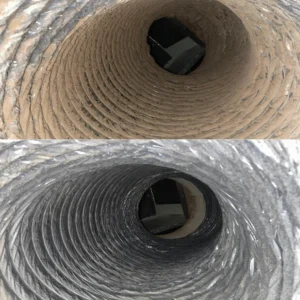
The honest answer is that not every house needs this every year. Ours includes a video inspection precisely so you can see the inside of your own system and decide from evidence rather than from a technician telling you it looked bad. Sometimes the answer is that it is fine and you should wait.
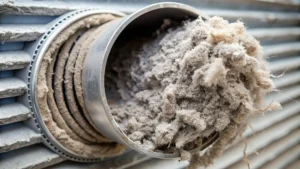
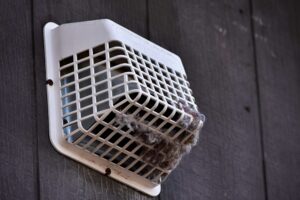
If the dryer is in a room that gets dusty, it is worth checking that line too while someone is out. Our dryer vent cleaning page covers what that involves.
One last thing about the brown sky
The dust that lands on your patio furniture gets swept off in ten minutes. The dust that made it into your return plenum stays until someone removes it, and it keeps moving through your house every time the system cycles.
That is the whole argument for paying attention after a bad season.
The attic problem specific to Phoenix
Most homes here run ductwork through an unconditioned attic. That attic gets brutally hot, it vents to the outside on purpose, and it fills with the same airborne dust as everywhere else during a storm.
Your ducts sit in that environment. If there are gaps at a joint, a loose connection at a boot, or damaged insulation on a flex run, attic air gets pulled into your supply ducts and delivered straight to your rooms. You are not filtering that air. It bypasses the filter entirely because it enters downstream of it.
This is why some homes get dustier after a storm than their neighbors despite identical filters and habits. It is not the filter. It is a leak in the attic delivering unfiltered air into the system.
A video inspection is how you find it. You are looking for separated joints, crushed flex duct, and connections that have worked loose over years of thermal cycling in an attic that swings from freezing to a hundred and forty degrees.
What to do while a storm is actually happening
Close windows and exterior doors before it arrives, not while it is on top of you. Once the wall of dust reaches the house the pressure difference is already doing its work.
Leave the AC running on its normal setting. People sometimes shut the system off thinking it pulls dust in. Your air handler recirculates indoor air through a filter, so running it is generally helping. What matters more is that the filter is clean enough to do its job.
Skip the whole-house fan and skip opening up afterward to air the place out. The instinct is understandable and it undoes everything.
If you have a swamp cooler, that is a genuinely different situation, because it draws outside air in by design. During an active dust event, running it means pulling storm air directly through the house.
A short checklist for after the season
In October, once the last storms have passed, five things are worth doing.
Replace the filter, regardless of how long it has been in. Pull the return grilles and look at the interior surfaces of the plenum with a flashlight. Check whether your dryer vent hood outside has collected debris. Look at your outdoor condenser and rinse the fins if they are packed with dust. And get eyes inside the ducts, either your own or someone else with a camera.
That last one is the only way to know whether the season actually left anything behind, or whether your house handled it fine and you can skip the cleaning this year. Both are real outcomes and we tell people both.
How to tell if it is your ducts or just the outside
There is a simple way to separate the two, and it costs nothing.
Clean a dark, flat, horizontal surface completely. The top of a bookshelf works, or a dark dresser. Then pay attention to where the film returns first and how fast.
If dust reappears fastest near supply vents and shows up within a couple of days, your system is redistributing it. If it returns evenly across the whole house over a week or two, and heaviest near windows and exterior doors, you are dealing with infiltration and the fix is sealing rather than cleaning.
If it is both, which is common here after a hard season, do the sealing first. Otherwise you clean the system and immediately start refilling it from the same gaps.
The Unmatched $499 Complete-System Clean
For $499, one HVAC system cleaned end to end: the supply ducts, the returns, every register, the air handler, the blower, the accessible coil and the dryer vent, every component brushed, vacuumed and disinfected, with before-and-after video so you see exactly what is going on inside. Nothing is due up front.