Mesa is a city of contrasts. It stretches from a historic downtown founded back in 1878 all the way out to brand new master-planned communities on the eastern edge of the Valley. Drive from Main Street out toward the east side and you pass through almost every era of Arizona home building along the way.
That range shows up in the laundry room too. The dryer vent problems in a 1950s home near downtown are quite different from the ones in a house built on the east side a few years ago. Here is what tends to go wrong in each, the signs to watch for, and what it costs to deal with.
Two very different housing markets in one city
Few cities in the Valley mix old and new the way Mesa does. The older neighborhoods around downtown and west Mesa have homes from the 1950s and 60s. The newer communities on the east side have homes built in the last couple of decades, many of them larger and laid out very differently.
A dryer vent is a simple thing, but how it was installed depends heavily on when and how the house was built, and on what has changed since. That is why the same symptoms, a slow dryer or a hot laundry room, can have different causes depending on which part of Mesa you live in.
Older homes near downtown and west Mesa
Homes in Mesa’s established neighborhoods have had a long time to change. Laundry areas get moved, garages get converted, and additions go up, and the dryer vent tends to be rerouted every time.
Laundry that has moved
A home built in the 1950s may not have had a dryer at all in its original layout. When laundry was added or moved later, the vent often took whatever route was available, which can mean long runs, sharp turns and sections that were never meant to carry lint.
These older routes are also harder to see. Sections hidden inside walls or running through a low attic can go decades without anyone looking at them, which is why the problem in an older home can sit in a part of the vent nobody knew was there.
Old flexible duct behind the dryer
Older installations sometimes use thin flexible duct behind the dryer. It is easy to crush when the dryer is pushed back against the wall, and a crushed section restricts airflow and traps lint. It is worth a look in any older home, especially one where the dryer has been replaced or moved more than once.
Plastic or thin foil flexible duct also handles a dryer’s heat less well than rigid metal duct, and building codes generally call for metal. If you find white plastic or thin foil duct behind your dryer, it is worth having it looked at.
Newer homes on the east side
The master-planned communities on Mesa’s eastern edge bring a different set of issues. The homes are newer, but that does not mean the dryer vent is trouble free.
Long runs in bigger homes
Larger homes often put the laundry room well away from an outside wall, sometimes on a second floor. That can mean a long vent run through the attic or up to the roof. Long runs and roof exits give lint more distance to travel and more chances to settle along the way.
Second-floor laundry rooms are common in larger newer homes. They are convenient, but they often mean the vent travels a long way before it reaches the outside, and lint that settles in a long horizontal run in the attic is easy to overlook for years.
Construction debris left behind
During a build, dust and debris can find their way into a vent line before the dryer is ever installed. It is not unusual for a relatively new home to have a vent that is already partly restricted from the start.
Heat and dust make it worse
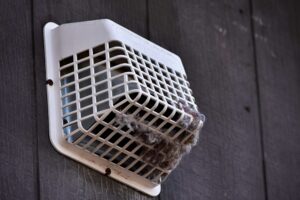
Mesa summers are hot, and the attic above a laundry room can get extremely hot. A vent running through that heat, combined with the fine desert dust that gets everywhere in the Valley, gives lint every chance to cling to the inside of the line. After monsoon season, vent caps and flaps can also collect wind-blown debris.
Moisture plays a part too. The warm, damp air leaving a dryer can leave moisture behind in a vent, particularly in a long run through a hot attic, and damp lint sticks to the inside of the duct far more readily than dry lint does.
Signs your Mesa dryer vent is clogged
The warning signs are the same across the city. Your dryer takes longer than it used to or needs a second cycle to finish a load. The lint trap fills up faster than it used to. The outside vent flap will not open properly when the dryer is running. The laundry room gets noticeably warm. Or it has simply been more than a year since your last cleaning.
Any one of those is a good reason to have the vent checked. Several together usually mean it is overdue.
Why cleaning the lint trap is not enough
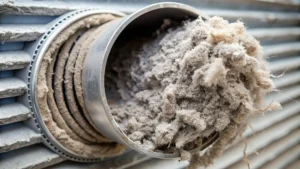
Cleaning the lint trap after every load is a good habit, and it helps. But the trap only catches part of the lint. The rest travels into the vent line, and that is where the buildup happens. No amount of lint trap cleaning will clear a vent that has been collecting for years.
Dryer sheets can make it worse. Some leave a residue on the lint screen that lets less air through, so it is worth washing the screen with warm soapy water every so often and letting it dry completely before putting it back.
How often to clean in Mesa
For most Mesa households, having the dryer vent cleaned about once a year is a sensible habit. Homes with long runs, roof exits or very heavy laundry use may benefit from more frequent checks, and so may older homes where the vent route has changed over the years.
A simple way to remember is to tie it to something that already happens each year, such as the start of summer or a routine AC check, so the dryer vent does not quietly slip for three or four years.
Rentals and homes you just bought
Mesa has plenty of rental homes and a steady flow of buyers. In both cases the history of the dryer vent is usually unknown. If you just bought a home or you manage a rental, having the vent inspected and cleaned gives you a known starting point instead of inheriting someone else’s years of lint.
For landlords, a clean vent is also one less thing to worry about between tenants, and before and after video gives you a simple record that the vent was maintained.
What a dryer vent cleaning includes
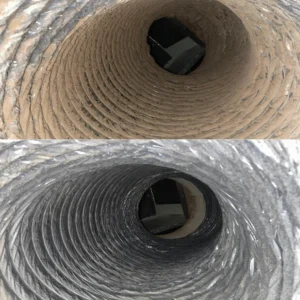
We clean the whole run, from the back of the dryer to where the vent exits the house, not just the part you can see. We check the vent flap or cap, and every job includes before and after video so you can see what came out. Every job also carries our one year warranty.
If we find something beyond a clog, such as a crushed section or a disconnected line, we show you on the video before recommending anything.
When cleaning is not enough
Sometimes a vent needs more than a cleaning. A crushed section, a disconnected line in the attic or the wrong type of duct may need repair or replacement. If we find that, we will show you and explain your options. Our dryer vent repair and replacement page covers when that makes sense.
Common questions from Mesa homeowners
Can I clean the dryer vent myself?
You can clear the part of the vent you can reach behind the dryer, and keeping the lint trap clean helps. What most homeowners cannot easily reach is the rest of the line inside the walls, through the attic or up to the roof, which is where most of the lint collects. A kit from a hardware store rarely clears a long run completely.
Does a new dryer fix the problem?
Not on its own. A new dryer connected to a restricted vent will struggle just as the old one did, and it can make the new machine work harder than it was designed to. It is worth having the vent cleaned when you install a new dryer so it starts with a clear path.
Is a slow dryer always the vent?
Not always. A worn heating element or a failing part inside the dryer can cause similar symptoms. Checking the vent first is a sensible step, because a clear vent rules out one likely cause before you spend money on appliance repairs.
What it costs
Our dryer vent cleaning starts at $99. If your vent is fully clogged, our clog removal service starts at $199. We tell you the price before any work begins. For a full picture of air duct cleaning for Mesa homes, see our Mesa service page.
We know Mesa
We are family owned and have served Mesa homeowners since 2015, from the older neighborhoods near downtown to the newest communities on the east side. We are BBB accredited, we hold a 4.6 star rating across more than 640 Google reviews, and we answer the phone 24 hours a day.
If your Mesa dryer is running slow or it has been a while, call us at (623) 200-4222 or book a visit online. We will check the whole vent run, tell you the price before we start, and show you what we find.