Decontamination sounds like a word for a disaster. Most of the time it is not. It is what you do when cleaning removes the material but does not address what the material left behind.
It is also one of the easiest services in this industry to oversell, so it is worth laying out plainly when it is warranted and when someone is padding an invoice.
Cleaning and decontamination are different jobs
Cleaning is mechanical. Debris is agitated loose and pulled out under negative pressure. When it is done, the material that was in your ducts is in a collection bag instead.
Decontamination is chemical or biological. It treats surfaces to address microbial growth, bacteria, or persistent odor that remains after the physical debris is gone.
The order matters and it only goes one way. Applying an antimicrobial to a duct full of debris accomplishes very little, because you are coating the dirt rather than the duct. Anyone offering to treat a system without cleaning it first has the sequence backwards.
When it is genuinely warranted
Growth on surfaces after cleaning
If a coil or duct interior shows visible growth that persists once the debris is removed, treating the surface is the appropriate next step. This is the most common legitimate case in Phoenix, and it usually traces back to a coil that stays wet.
After water intrusion
A roof leak, a burst line, or a failed drain pan that put water into ductwork is a real decontamination case. Ducts that got wet and dried slowly are the textbook scenario, and cleaning alone does not address what grew while they were damp.
Persistent odor with no debris explanation
Smoke from a fire, heavy tobacco residue from a previous owner, or a strong pet odor that survived cleaning are cases where something has bonded to surfaces. If the ducts are visibly clean and the smell persists, that is the signal.
After a rodent or bird infestation
Nesting material comes out mechanically. Droppings and urine that soaked into insulation and porous surfaces are a different problem. This is one of the clearer cases for treatment, and it usually pairs with replacing whatever was contaminated rather than treating it.
Specific health situations
If someone in the house is immune compromised and a physician has raised the indoor environment, that is a legitimate reason to go further than routine cleaning. We treat that as a real request rather than an upsell opportunity.
The test we would apply: can someone point at a specific reason in your specific system, visible on the inspection footage, that cleaning alone did not resolve? If the answer is a general statement about germs or air quality, that is a product being sold rather than a problem being solved.
When it is being oversold to you
The pattern is consistent and easy to spot once you know it.
It is offered before anyone has looked inside your system. It is bundled automatically into every quote regardless of condition. It is justified with general claims about bacteria rather than something found in your house. The word sanitize is used without any explanation of what is being treated or why. Or it is presented as a permanent solution, when any surface treatment has a limited life and does nothing about the conditions that caused the problem.
That last point is the important one. If your coil grows biofilm because it stays wet eight months a year, treating it once addresses today and not next summer. The durable answer is a combination of keeping it clean, keeping drainage working, and possibly UV on the coil as prevention.
What the treatment actually is
Products used should be registered for use in HVAC systems specifically. That is not a detail to wave past. Something not intended for ductwork can leave residue that gets distributed through your house every time the system runs.
Application is typically by fogging or direct spray onto surfaces after cleaning, with the system off and a dwell period before it runs again. You should be told what is being used, whether anyone needs to be out of the house, for how long, and whether pets need to be considered.
If a company cannot answer those questions clearly, that is disqualifying regardless of price.
Where mold sits in this
Mold gets used loosely in sales conversations and it is worth separating.
Something dark and fuzzy on a video screen warrants attention. It does not warrant a species identification from someone looking at a monitor, and it does not automatically mean remediation.
Genuine mold remediation is a different scope of work with different standards, and if that is what you are dealing with it belongs under mold remediation rather than being folded into a duct cleaning ticket. If a surface treatment is being offered as a fix for a real mold problem, that is the wrong service.
What we would tell you
Most homes that call us do not need this. They need the debris removed and their coil cleaned, and that is the end of it.
The homes that do need it usually know why before we arrive. There was a leak, there was an animal, there was a fire, or there is a smell that has outlasted everything else they have tried.
If you are not in one of those situations and someone is pushing treatment hard, ask them to show you the specific thing on your footage that requires it. Our decontamination service page covers the details, and the inspection comes first either way.
What it does not do
It does not prevent recontamination. Any surface treatment addresses what is on the surface now. It does not stop dust from arriving next month, and it does not change the conditions that let something grow in the first place.
It does not purify the air in your rooms. Treating duct interiors is not the same as treating the air volume of a house, and claims in that direction are outrunning what the work does.
It does not substitute for fixing a cause. If the drain pan is not draining, if a duct is sweating because its insulation failed, if there is a roof leak above the attic run, treatment is a temporary measure on a permanent problem. Fix the water first. Always.
It does not last indefinitely. Anyone offering permanent protection from a single application is describing something that does not exist.
How to price it sensibly
Decontamination should be a separate, itemized line, added after an inspection, with a stated reason attached to it.
If it appears on a quote as a mandatory package component before anyone has looked at your system, you are not buying a solution, you are buying a default. Ask what happens to the price if you decline it, and ask what specifically it is treating.
A company that has a real reason will give you one in a sentence. A company that does not will give you a paragraph about germs.
The sequence that makes sense
Inspect first, so there is a documented reason. Clean second, because treating debris is treating the wrong surface. Treat third, only if the inspection found something specific. Then fix whatever caused it, because otherwise you will be having this conversation again next year.
Most homes stop after step two, and that is the correct outcome, not a missed opportunity.
A word on the language
Sanitize, disinfect, purify, and decontaminate get used interchangeably in this industry and they do not mean the same thing. That imprecision is not accidental, because vague words are harder to hold anyone to.
If someone is selling you a treatment, ask two questions. What exactly is being treated, and what are you treating it for. A straight answer sounds like a coil with visible growth, or a duct that got wet in a roof leak, or contamination left by an animal.
An evasive answer sounds like general protection against germs and bacteria. There is no such product for a residential duct system, and the people using that phrasing know it.
If you are not sure
Get the inspection, get the cleaning, and then look at what is left. Odor, visible growth, or a known water event are the three things that would move us to recommend going further.
Absent one of those, save your money.
The one situation where we push back the other way
Occasionally someone declines treatment when they genuinely should not, and it is almost always after water.
If a roof leak or a failed drain line put water into your ductwork and it dried slowly in a warm attic, cleaning the debris out is not the whole job. That is the scenario where we will tell you plainly that we think you need more than a cleaning, and where declining it means you will be smelling the result in a few months.
Everything else on this page is us talking you out of spending money. That one is the exception.
The Unmatched $499 Complete-System Clean
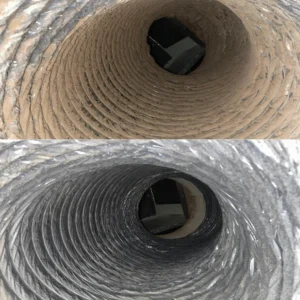
For $499, one HVAC system cleaned end to end: the supply ducts, the returns, every register, the air handler, the blower, the accessible coil and the dryer vent, every component brushed, vacuumed and disinfected, with before-and-after video so you see exactly what is going on inside. Nothing is due up front.