Drive through Queen Creek now and it is hard to picture the cotton fields and citrus groves that ran across this part of the Valley not that long ago. Some of that farmland is still here. A lot more of it is shopping centers, medical offices, restaurants, gyms and light industrial buildings that went up in the last ten years, most of them fast.
Fast construction is good for a growing town. It is not always good for the air handling inside the buildings. We clean commercial systems across the southeast Valley, and the buildings in Queen Creek have a pattern of their own. This is what that pattern looks like, what it costs a business, and when it is worth calling someone like us.
A commercial system is not a bigger house system
The first thing owners tend to assume is that commercial duct cleaning is residential duct cleaning with more vents. It is not, and treating it that way is how buildings end up half cleaned.
A house usually runs one or two package units or split systems with a few hundred feet of ductwork. A commercial building in Queen Creek might run six rooftop units, each serving its own zone, with trunk lines that change size, run through ceiling plenums and pass through fire dampers along the way. The equipment is bigger, the runs are longer and the access points are harder to reach.
Rooftop units change the job
Most of the retail and office buildings along the town’s commercial corridors run rooftop package units. That means the air intake, the blower and the coil all sit on the roof in direct Arizona sun and wind. Everything the monsoon throws at the roof gets a chance to end up inside the unit, and from there inside the building.
Zones mean the problem is rarely even
Because commercial buildings are split into zones, one part of a building can be in far worse shape than another. We regularly find a clean front office sitting next to a back room or kitchen zone that has not been touched in years. Cleaning only what is easy to reach leaves the worst sections exactly as they were.
What we find in newer Queen Creek buildings
You would expect a building that is five or six years old to have clean ductwork. In our experience the newer buildings here are often dirtier inside than people expect, and the reason goes back to how they were built.
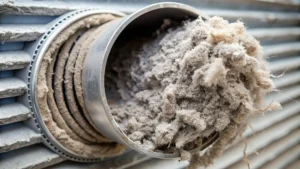
Construction dust is fine and heavy, and it does not leave on its own. It sits in the low points of the duct runs and in the bottom of the return plenums. Every time the system cycles, a little of it moves back into the occupied space.
Tenant build outs add another layer
Commercial spaces get rebuilt constantly. A new tenant takes a suite and walls come down, ceilings open up and flooring gets torn out, often with the system still running for the rest of the building. We see buildings where each build out has left its own layer of debris in a shared return.
Desert dust never stops arriving
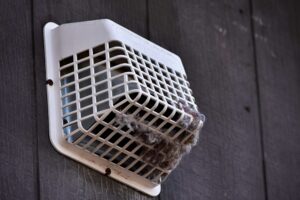
On top of the construction debris there is the ordinary dust of the southeast Valley. Open land, active construction sites and monsoon storms all put fine particles in the air, and a commercial system moving large volumes of outside air will collect more of it than a house does.
Restaurants are a different kind of problem
Queen Creek has added a lot of restaurants, and restaurant air handling deserves its own conversation. Cooking puts grease into the air. Some of it is captured by the kitchen exhaust hood, and some of it drifts into the general air system and coats the inside of the ducts.
A thin film of grease on the inside of a duct catches every other kind of dust that passes through. Over time that builds into a sticky layer that no filter change will fix. It restricts airflow, it holds odors, and in the worst cases it becomes a housekeeping and fire concern that an inspector will notice.
The dining room air system and the kitchen exhaust system are two separate things, and they need to be treated separately. If you run a restaurant and your dining room smells of the kitchen hours after close, the general ductwork is usually part of the answer.
Gyms, medical offices and shops
Every type of business loads its system differently, and it helps to know what yours is up against.
Gyms and fitness studios run hard all day, and the combination of heavy foot traffic, humidity from showers and a constant flow of people through the doors puts a lot of lint, skin and moisture into the air. Medical and dental offices have patients who notice air quality and staff who are in the space for long shifts. Retail shops with open back rooms, stock deliveries and cardboard handling produce more fiber and dust than most owners realize.
None of this means a building is unhealthy. It means the system is doing what it was designed to do, which is catching what is in the air, and at some point what it has caught needs to be removed.
Signs your building is due
Most commercial owners do not think about their ductwork until something changes. These are the things we hear about most often before a call.
Visible dust around supply vents, especially dark rings on the ceiling around the grilles, is the most common. Staff mentioning that the air feels stale, or that certain rooms never seem to cool properly, is another. Musty or cooking smells that hang around after hours point to material sitting inside the system. Rising cooling bills with no change in use can mean airflow is being restricted somewhere along the run.
If you are planning a tenant improvement, taking over a space from a previous business, or preparing for an inspection, those are also sensible times to have the system looked at before a problem becomes someone else’s complaint.
How often commercial systems need cleaning
There is no single number that fits every building, and anyone who gives you one without seeing your system is guessing.
As a rough guide, an office with light use and good filtration may go several years between cleanings. A restaurant, gym or any building that has recently been through construction will usually need attention sooner. The honest answer is to inspect first and clean when the inspection shows it is needed, rather than on a fixed calendar that has nothing to do with the actual condition of your ducts.
What a commercial visit looks like
Commercial jobs are scheduled around the business, not the other way around. We regularly work early mornings, evenings and weekends so that a restaurant can serve lunch or an office can keep working while we are there.
We look before we quote
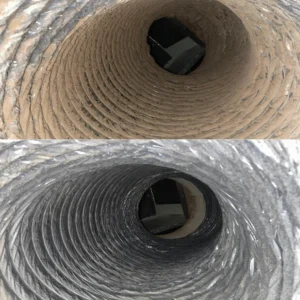
We start with an inspection, and we film the inside of the ductwork so you can see what we see. Commercial clients tend to appreciate this, because it gives the owner or property manager something concrete to show a landlord, a partner or a head office before approving the work.
The cleaning itself
The system is put under negative pressure so that loosened debris is pulled out of the building rather than pushed into it. We work zone by zone, cleaning the supply and return runs, the plenums and the air handler components, and we protect the space below while we work.
Proof at the end
When the job is done you get the before and after footage. For a business that has to answer to a landlord, an insurer or an inspector, that record is often as useful as the cleaning itself.
Why the price range is wide
Commercial pricing depends on the size of the building, the number of units and zones, how accessible the ductwork is, and how much material is inside it. A small single suite office and a restaurant with a heavily loaded system are very different jobs, and pricing them the same way would mean overcharging one and cutting corners on the other.
That is why we inspect and quote each commercial building individually. You get a price based on what is actually in your system, and you get to see the evidence behind it before you agree to anything.
What to ask any company you are considering
Whether you call us or someone else, a few questions will tell you a lot. Ask whether they inspect and film the system before quoting, and whether you will see the footage. Ask whether they clean the returns, plenums and air handler, or only the supply vents. Ask how they protect the occupied space and whether they can work outside your business hours. A company that is confident in its work will be happy to answer all of it.
We know Queen Creek
We are family owned and have worked across the Phoenix Valley since 2015, including the southeast Valley communities of Queen Creek, San Tan Valley, Gilbert and Mesa. We are BBB accredited, we hold a 4.6 star rating across more than 640 Google reviews, and every job carries a one year warranty. We answer the phone 24 hours a day.
If you manage or own a commercial building in Queen Creek, call us at (623) 200-4222 or request a commercial quote. We will inspect first, show you what we find, and tell you honestly whether your system needs cleaning now or can wait.