Drive down Central Avenue or along the Camelback corridor and you pass commercial buildings from almost every decade Phoenix has had. Some went up generations ago and have been gutted and rebuilt inside more than once. Others finished construction only a year or two back. From the street they all look fine. Above the ceiling tiles, the story depends on how each building has been used, and for how long.
We clean commercial air systems across Phoenix from our office on East Thomas Road, and the same handful of patterns come up again and again. An office tower, a busy restaurant and a warehouse full of cardboard all load their ductwork in very different ways. This is what that looks like, what it means for a business, and when it is worth having someone look inside.
Phoenix buildings run their air systems harder than most
In much of the country a commercial air system gets a break in the spring and the fall. Phoenix does not really give it one. Cooling season runs from spring deep into autumn, and on the hottest days a building’s units can run almost around the clock just to hold a comfortable temperature inside. That is an enormous volume of air moving through the same ducts, and every bit of it carries whatever is in the space along with whatever came in from outside.
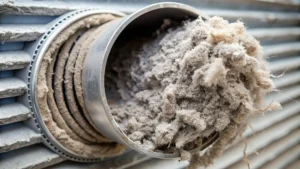
More run time means more material settling inside the system. Filters catch part of it. The rest clings to the inside of the ducts, collects at the bottom of the return plenums and builds up on the coils and the blower. In a building where the equipment rarely rests, that buildup happens faster than owners who have moved here from other markets tend to expect.
Older buildings carry more than one lifetime of dust
Central Phoenix has a lot of commercial space that has been renovated several times over the decades. A building that started as one kind of office may have been cut into smaller suites, opened back up, turned into a clinic and then into something else again. Each round of work usually happened with at least part of the air system still running for the rest of the building.
Older ductwork also shows its age in other ways. Joints loosen, lining inside the duct can break down, and sections patched during past remodels do not always line up the way they should. None of that is unusual in a building that has been in service for decades, but it does mean a cleaning in an older building needs someone looking carefully at what is actually there rather than working from assumptions.
Whose ductwork is it in a multi-tenant building
A large share of Phoenix businesses lease their space, and that raises a question that stalls a lot of these jobs before they start. Who is actually responsible for the air system?
Shared equipment and shared returns
In some buildings every suite has its own units. In others, several tenants share rooftop equipment and a common return. When the system is shared, cleaning one suite without the rest of the connected ductwork does not accomplish very much, because debris from the untouched sections keeps moving through and settling right back where it was.
Check the lease before you schedule
Leases handle HVAC maintenance in different ways, and the answer is usually written down somewhere. If you are a tenant, it is worth confirming whether duct and system maintenance falls to you or to the landlord before booking anything. If you manage the building, knowing which units serve which suites makes the inspection faster and the quote more accurate for everyone involved.
Restaurants have two air systems, not one
Phoenix has a big and busy restaurant scene, and restaurants load their air differently from any other kind of business. Cooking puts grease into the air. The kitchen exhaust hood captures much of it, but some always drifts into the general air system that serves the dining room and the back of house.
Inside a duct, a thin film of grease catches every other kind of dust that passes by and turns it into a sticky layer that no filter change will fix. It holds odors, it restricts airflow, and it gets harder to remove the longer it sits. The kitchen exhaust hood and the dining room air system are separate systems with separate cleaning needs, so it helps to know which one you are asking about when you call.
Offices where people spend eight hours a day
An office rarely has one obvious source of contamination. What it has is people, paper, carpet and a great many hours. Skin cells, clothing fibers, paper dust and whatever comes in on shoes all end up in the air, and the return system pulls it back through the ducts over and over across a working day.
Staff notice air quality even when they cannot put a name to the problem. The complaints tend to sound like a conference room that always feels stuffy, a floor that never cools evenly, or dust that settles back on desks a day after the cleaning crew has been through. Those are worth taking seriously, because they are often the first sign that the system is carrying more than it should.
Medical, dental and wellness suites
Clinics, dental offices, physical therapy practices and wellness studios have patients and clients who pay close attention to the space they are in. They also tend to have staff working in the same rooms for long shifts. A clean air system is part of how these businesses present themselves, and it makes sense to treat duct cleaning as part of regular facility maintenance rather than waiting until someone complains about the air.
Warehouses and light industrial space
Phoenix has a large amount of warehouse, distribution and light industrial space, and those buildings collect a different kind of dust. Big doors open and close all day, pallets and cardboard shed fiber, and forklifts and delivery vehicles stir up whatever settles on the floor. A building that combines offices up front with a warehouse behind can have a fairly clean office side and a very dusty warehouse side running on the same equipment.
The signs that usually show up first
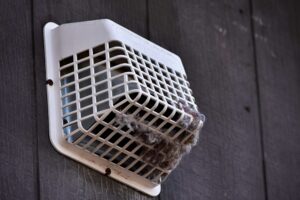
Most owners and managers do not think about the ductwork until something changes. Dark rings of dust around the ceiling supply grilles are one of the most common signs. Musty or cooking odors that hang around after hours are another. So are rooms that never seem to reach the thermostat setting, and cooling bills that keep climbing without any real change in how the building is used.
Filters that clog far faster than they used to point the same direction. So does a building where tenants or staff start mentioning dust, stale air or headaches from a stuffy room. On their own none of these proves the ducts are the cause, but together they are a good reason to look inside before assuming the problem is somewhere else.
Good times to schedule an inspection
There is no single calendar that fits every building, and anyone who gives you a fixed number of years without seeing the system is guessing. That said, a few moments make a lot of sense for a look inside.
Before a new tenant moves in is one, because it gives them a clean start and gives the landlord a record. After any renovation is another, since that is when construction debris is most likely to be sitting in the ducts. The end of monsoon season is a third, because the storms push fine dust into rooftop equipment. And if a space has changed use, from office to clinic or from retail to restaurant, the system may be carrying contamination it was never designed to handle.
How we work in an occupied building
Commercial work usually has to happen when the space is empty, which means evenings, weekends or a planned shutdown window are common. We plan the job around the business so that it can keep operating.
We inspect and film first
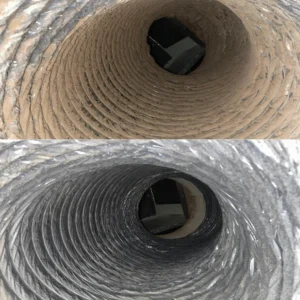
We start by looking inside the system and filming what we find, so the owner or property manager can see the condition of the ductwork before approving anything. That footage is also useful when a decision has to go through a landlord, a partner or a head office somewhere else.
Negative pressure cleaning
The system is put under negative pressure so loosened debris is pulled out of the building instead of being pushed into the occupied space. We work section by section through the supply and return runs, the plenums and the air handler components, and protect the space below as we go.
Proof at the end
You receive before and after video when the job is done. For a business that answers to a landlord, an insurer or an inspector, that record is often as useful as the cleaning itself.
What drives the price
Commercial pricing depends on the size of the building, the number of units and zones, how easy the ductwork is to reach, and how much material is actually inside it. A single-suite office and a restaurant with a heavily loaded system are very different jobs, and pricing them the same way would mean overcharging one and cutting corners on the other. That is why we inspect and quote each commercial building individually, so the price reflects what is really in the system and you can see the evidence behind it before you agree to anything.
We know Phoenix
We are family owned and have worked across the Phoenix Valley since 2015, from our main office at 2720 E Thomas Rd, Building C, Unit 270. We are BBB accredited, we hold a 4.6 star rating across more than 640 Google reviews, and every job carries a one year warranty. We answer the phone 24 hours a day.
If you own or manage a commercial building in Phoenix, call us at (623) 200-4222 or request a commercial quote. We will inspect first, show you what we find, and tell you honestly whether the system needs cleaning now or can wait.