You dusted on Saturday. Ceiling fan blades and the top of the fridge that nobody ever looks at. By Tuesday there is a gray film on the coffee table again, and you could write your name in it on the dark wood of the dresser.
Most people blame the air ducts first. Sometimes they are right. Often they are not, and if the real problem is a worn strip under the back door, a duct cleaning will not change much. The dust just comes back on the same schedule and you are out the money.
So here is the order we would check things in, free stuff first. The ducts come last on purpose. Rule out the easy causes before you pay anyone, including us.
First, where house dust comes from
Household dust is a mix. Part of it is outside dirt that blew or walked in. The rest gets made inside: fibers from carpet and bedding, pet hair, skin flakes, soot from candles and cooking. The question is why yours makes so much.
The EPA says dirty ducts are only one of many sources of particles in a home, and that outdoor air and plain daily life can add more than the ducts do. We agree. Cleaning ducts can cut down dust blowing out of dirty ductwork. It does nothing for dust coming from anywhere else.
1. You live in the desert
This one is not your fault and you cannot fix it. Phoenix is dry and dusty, and fine dirt rides into the house every time a door opens. During monsoon season it gets worse. A dust storm can push grit through any gap it finds, and you will see it on window sills and tile floors for days after.
If your dust spikes in summer and calms down the rest of the year, weather is a big part of it. That alone does not mean you need frequent duct cleaning. It means the next two items matter more here.
2. Gaps around doors and windows
Your house leaks air. Every house does. Weatherstripping dries out and cracks in desert heat. Door sweeps wear down. Wherever air can get in, dust comes with it.
Free check: on a breezy afternoon, hold a strip of tissue or a lit incense stick near the edges of exterior doors and windows, and the door to the garage. If it flutters or the smoke pulls sideways, air is moving through. Also look at light-colored carpet along the bottom of exterior walls and under doors. A dark gray line along the edge usually means air has been filtering through that gap and leaving dirt behind like a filter would.
Weatherstripping and a door sweep are cheap hardware store fixes. Start with the door to the garage if that one leaks. Garages are dusty.
3. The air filter: dirty, wrong size, or cheap
This one you can fix yourself today. Your AC pulls air from the house, runs it through the filter and pushes it back out. If the filter is not doing its job, the system just moves dust around all day.
Pull the filter out and look at it. If it is gray and caked, it is overdue. Phoenix systems run hard for most of the year, so a filter can load up faster here than the package suggests, especially around monsoon.
Then check the fit. The size is printed on the edge of the filter frame. Compare it to the slot. A filter that is even a little too small leaves a gap, and air takes the easy path around it instead of through it. The EPA calls this out directly: no missing filters, and no gaps where air can bypass the filter holder.
Last, quality. The cheapest fiberglass filters mostly protect the equipment and let fine dust through. The EPA’s advice is the highest efficiency filter your system’s maker recommends. The densest filter on the shelf can choke airflow on a system not built for it, so check the manual or the label on the air handler.
A dusty return grille (the big vent where air gets pulled in, often in a hallway or ceiling) is normal. The EPA says so too. Air full of house dust gets pulled through it all day. Vacuum or wipe it and move on. It does not by itself mean your ducts are dirty.
4. Pets
Dogs and cats shed hair and dander constantly, and it goes everywhere, including into the return vents. If your dust problem started around the time you got a pet, or it looks fluffy and comes in clumps, that is a strong clue. Brushing pets outside, washing their bedding often and keeping the filter fresh make more difference here than anything done to the ducts.
Pet hair that slips past the filter can build up in ductwork over time, so pet homes may need duct cleaning sooner. But the fix starts with the animal and the filter.
5. Carpets, rugs and fabric
Carpet holds dust, and walking on it kicks that dust back into the air. Same with heavy curtains and the couch. Older carpet also breaks down and sheds its own fibers.
Vacuuming helps, but the EPA points out a catch: it can raise the dust in the air while you do it and for a while after. A HEPA vacuum, or the best filter bags yours takes, cuts that down. Dust surfaces after you vacuum, not before.
6. The fan setting on your thermostat
Look at your thermostat. Most have a fan setting of AUTO or ON. On AUTO, the blower only runs while the system is heating or cooling. On ON, it runs all the time.
Neither is wrong. With a good filter and a sealed return side, running the fan more can catch more dust, since more air passes through the filter. With a bad filter or a return leak (next section), a fan that never stops spreads dust around the clock. If yours is on ON and the dust is bad, switch to AUTO for a week and compare. Free experiment.
7. Leaky return ducts pulling in attic dust
Most people never think of this one, and it matters most if your ductwork runs through the attic. The return side of your system is under suction. If a return duct has a loose joint or a gap where it meets the air handler, it pulls air from wherever that gap is. In the attic, that air is full of insulation fibers and fine dust. And if the leak sits past the filter, that dirt goes straight through the system and out your vents.
Signs it might be happening:
- Dust is noticeably worse when the AC is running.
- Gray or fibrous streaks around supply vents on the ceiling.
- Dirt streaks around the air handler closet door.
- Rooms that are dustier than others for no clear reason.
That is a repair problem first. The EPA is clear: fix the cause before any cleaning, or the dirt comes right back.
8. Dirty ducts recirculating dust
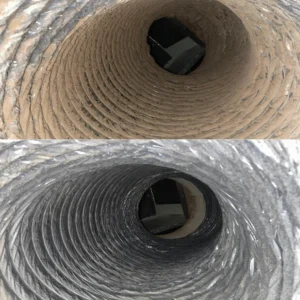
Now the ducts. Ductwork does collect dust and debris over time, and when there is enough of it, the system can blow some of it back into the house. But the EPA notes that a lot of the dirt inside ducts sticks to the duct walls and does not necessarily end up in your living room. Dusty ducts and a dusty house are not automatically the same problem.
The signs that point to the ducts being part of it:
- A visible puff of dust from the supply vents when the system kicks on.
- Buildup you can see when you pull a supply register off and look past it with a flashlight.
- You recently remodeled, and the system ran while drywall was being sanded or cut. Our post on duct cleaning after construction dust covers that situation.
- Signs of pests, like droppings near vents.
Our position is simple. Duct cleaning is worth it when there is a documented problem inside the ductwork, like heavy buildup or pests. When the ducts are already clean, it may not be necessary at all, and we would rather tell you that than sell you a job that will not change how often you dust. You can read how we approach air duct cleaning in Phoenix on our service page.
Free checks to do this week
- Pull the AC filter. Dirty? Right size for the slot? Gaps around it?
- Tissue test at exterior doors, windows and the garage door.
- Look for dark lines on carpet edges along exterior walls.
- Set the thermostat fan to AUTO for a week.
- Pull one supply register and look inside with a flashlight.
- Notice whether the dust gets worse when the AC runs.
If fixing the filter and the gaps makes the dust drop off, you just saved yourself a service call.
How a video inspection settles it
Done all that and the dust is still bad? Then it is time to look inside the system. A flashlight shows you a little way past a register. A video inspection shows what is actually in the supply and return lines and around the air handler.
We document what we find on video so you see your own ductwork. Clean ducts, you will see that. Heavy buildup or pests, you will see that too. If it looks more like a leaking return than dirty ducts, we will say so and show you, because cleaning would not fix it. The EPA suggests asking any duct cleaner to show you the contamination before they clean. Any company you hire should be fine with that. You can see what our footage looks like in our post on before-and-after video.
If cleaning is the answer, our complete-system clean covers the whole system, not just the ducts. That matters, since a dirty blower or coil can keep feeding dust into freshly cleaned ducts.
The Unmatched $499 Complete-System Clean
One HVAC system. Ducts, returns, registers, air handler, blower, coil and dryer vent. Every component brushed, vacuumed and disinfected. Nothing due up front, and we do not accept payment from unhappy customers.
We know Phoenix
We are a family-owned company and have been cleaning ducts and dryer vents across the Phoenix Valley since 2015. We are BBB accredited with an A rating, we hold 4.7 stars across more than 800 Google reviews, and someone answers the phone 24 hours a day.
If you have run through the checklist and the dust keeps winning, call us at (623) 200-4222 or book a visit online. We will look inside, show you what is there, and tell you straight if your ducts are not the problem.