Almost all of duct cleaning happens where you cannot watch it. Inside walls, above ceilings, in the back of a cabinet in the attic.
Which means that without footage, you are not evaluating the work. You are evaluating how much you liked the crew.
What you get
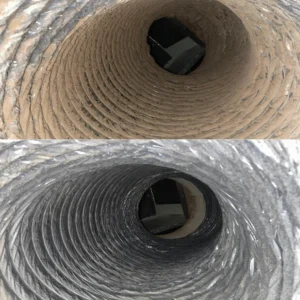
Footage from inside your own ductwork before we start and after we finish. Not stock images, not a photo of somebody else’s house, not the marketing reel. Your ducts.
You look at it before you pay, because the payment depends on it.
Why this is the whole argument
Think about what you are normally asked to do. A stranger goes into a part of your house you have never seen, spends two hours there, comes out and says it is done, and you pay.
Every part of that transaction runs on trust and none of it runs on evidence. Documentation is just the decision to stop asking for the trust.
The before shot is the important one
The after is nice to look at. The before is the one that answers the question you actually had, which was whether this was worth doing at all.
Some houses genuinely do not need it yet, and the footage shows that too. We would rather you find that out and tell your neighbor than pay us for a job you did not need.
Ask any company you are considering whether you get footage from inside your own system, before and after. If the answer is a brochure, a certificate, or a photo at the register opening, you are being asked to take their word for it.
What the footage usually shows
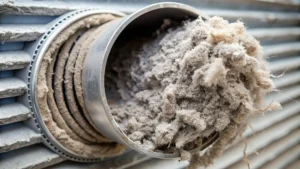
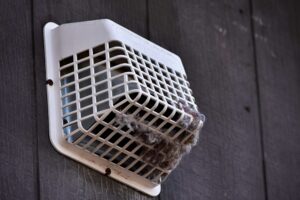
In a Phoenix house that has not been done in several years, the usual finds are a packed layer on the blower wheel, construction dust that has been sitting in the returns since the house was built, and lint through the dryer run.
Occasionally something nobody expected. A duct that came loose and has been pushing conditioned air into the attic. A dryer vent that was never actually connected to the outside.
What we do when we find one of those
We show you, we explain it, and we do not quote the repair on the spot.
Finding a problem is not an opportunity to sell you something while we are standing in your hallway. You get the footage and the explanation, and what you do next is yours.
Why it keeps us honest too
A crew that knows every job gets filmed before and after does the job differently. That is not a criticism of our people, it is just true of all people.
The documentation is as much a standard for us as it is proof for you.
It is how the guarantee works
Not satisfied, you do not pay. That promise is meaningless if you have no way to judge the work.
The footage is what turns the guarantee from a slogan into something you can actually act on while the crew is still there.
You keep it
It is yours. Useful if you are selling the house, dealing with a property manager, or just want a record of when the system was last done and what state it was in.
What it does not prove
It shows the ducts are clean. It does not prove your allergies will improve or your power bill will drop, and we are not going to claim it does.
What we will stand behind is the thing on the screen.
Booking
Call or text for an arrival window. Four hundred and ninety nine dollars, one HVAC system, documented start to finish, nothing due until you have seen it.
Why a certificate is not evidence
Plenty of companies leave behind a printed certificate, a sticker on the air handler, or a line on the invoice confirming the system was cleaned.
None of that is evidence. It is a company certifying its own work, which is exactly the thing you were trying to verify. A sticker proves somebody had a sticker.
Footage from inside your own duct is a different category of thing. It is the only part of this that does not require you to trust us.
What we film and when
Before footage goes first, which sounds obvious and is the part most likely to be skipped. A before shot captured after work has started is not a before shot.
Then the after, from the same access points, so you are comparing the same locations rather than two unrelated angles. The blower wheel and the dryer run are usually the two that make the strongest case, because those are where material accumulates most visibly.
The honest limit of what footage shows
It shows the sections we can get a camera into. Residential ductwork has bends and branches, and no company is filming every linear foot of it.
Anyone telling you they have documented one hundred percent of a duct system is overselling. What you are getting is representative access points, before and after, which is enough to tell whether the job was real and not enough to be a survey.
What customers usually do with it
Three things, in our experience. They send it to a spouse who was skeptical about spending the money. They keep it with the house records. Or they forward it to a neighbor, which is how a decent share of our work arrives.
That last one is the actual business case for documenting every job. A photo of somebody else’s duct is marketing. A photo of your own is a reason to tell a friend.
Why we do not use it to sell
A camera pointed at something alarming is a powerful sales tool, and we are deliberately not using it that way.
If we find a genuine problem you get shown it and told what it is, and then we leave it with you. No same day quote, no discount for deciding while the van is outside. The footage exists to prove the work you paid for, not to open a second conversation.
What it costs
Nothing extra. It is part of the $499, the same way the dryer vent and the air handler are part of it. There is no documentation package and no upgraded tier.
Charging separately for the proof that the work happened would be a strange business to be in.
What this replaces
The old version of this transaction was a technician saying it looks a lot better in there, and you saying great, and both of you moving on.
That exchange is not dishonest. It is just empty. Neither person in it has any information, and the homeowner is agreeing to something they have no way to assess. Replacing it with thirty seconds of footage is a small change that removes most of the reason people distrust this trade.
Why the dryer vent footage lands hardest
Of everything we film, the dryer run is the one people react to.
Lint is visually obvious in a way that duct dust is not, it comes out in a quantity that surprises people, and the connection to fire risk is immediate rather than abstract. A fair number of customers who booked for the ducts end up telling their neighbor about the dryer vent.
What we do with it afterwards
It is yours. We keep a copy on the job record so there is a reference point next time, and that is the extent of it.
We do not publish footage from a customer house as marketing without being asked. The before and after from your home exists for you to look at and keep, and turning it into an advert without a conversation would be a strange thing to do with something recorded inside somebody’s walls.
How to ask for it from anyone else
Before you book, not after. Ask whether you will be given footage from inside your own system, taken before work starts and after it finishes, and whether you get to keep it.
If the answer is yes, you have a company that is comfortable being checked. If the answer turns into a discussion about certificates and training, you have your answer too.
What the footage has saved us from
It cuts both ways, and the cases where it protected us are worth mentioning because they explain why we keep doing it.
Damage that was already there before we arrived. A register that was cracked when it came off the wall. A homeowner remembering the ducts as cleaner than they were. In every one of those situations the recording settled the question in under a minute, with nobody having to take anybody at their word.
A record that only ever helps the customer is a marketing asset. One that occasionally helps the company is an actual record.
Why we do not show you a camera feed and call it proof
Some companies will hand you a live view on a screen during the job and treat that as the documentation.
Live footage with nothing kept is not evidence, it is a demonstration. You cannot review it later, you cannot send it to anyone, and you cannot compare it to the next cleaning in three years. The keeping is the part that matters, which is why you leave with a copy rather than a memory of something you were shown.
What to look for when you watch it
Compare the same access point before and after rather than two different ones. Look at the blower wheel specifically, because blade shape is the easiest thing in the system to judge. And look at the dryer run at a bend rather than at the straight section.
Four minutes of looking tells you whether you got what you paid for. That is the entire point of it existing.
Nobody else hands you the evidence
Footage from inside your own system, before and after, yours to keep, included at no extra charge.
Plenty of companies will tell you it went well. Very few will show you, and fewer still will let you decide whether to pay after watching. That combination is unmatched, and it is deliberate.
The Unmatched $499 Complete-System Clean
One HVAC system. Ducts, returns, registers, air handler, blower, coil and dryer vent. Every component brushed, vacuumed and disinfected. Nothing due up front, and we do not accept payment from unhappy customers.