Ducts, returns, registers, air handler, blower, accessible coil, dryer vent. One HVAC system, four hundred and ninety nine dollars.
Every one of those components is brushed, vacuumed and disinfected. That matters as much as the list itself, because plenty of quotes cover the same parts and only vacuum them.
The rest of this page is what each part is, why it is on the list, and what it means when a cheaper quote leaves one of them off.
The supply ducts
These are the runs carrying conditioned air from the system out to the rooms. They are the part everybody pictures when they think duct cleaning, and they are usually the least interesting part of the job.
They matter because whatever is sitting in them is what your air travels through on the way to your bedroom.
The return ducts
These pull air back out of the house to be conditioned again, and they are where the real material collects. Returns run at a lower pressure and they are pulling household air, which means dust, pet hair and whatever else is loose.
Returns are also the most common thing left off a cheap quote, because there are fewer of them and nobody counts them. If you only remember one item from this page, make it this one. Ask whether the returns are included.
Every register and grille
The metal covers on your walls, floors and ceilings. They get pulled, cleaned and put back.
This is the part you can actually inspect afterwards, which is why it is worth doing properly rather than wiping the visible face.
The air handler
The cabinet where the air actually gets moved and conditioned, usually in a closet, a garage or the attic.
Cleaning the ducts and skipping the air handler is close to pointless. It is the hub. Everything that passes through your ducts passes through here first, and if it is filthy you have just cleaned the pipes attached to a dirty box.
This is the single biggest difference between a real cleaning and a cheap one. A low advertised price almost always means the ducts only. The air handler, the blower and the coil are where the work is, and they are where the second quote comes from.
The blower
The fan assembly that moves all the air. Blower wheels collect a packed layer of dust on each blade, and a loaded wheel moves noticeably less air while drawing the same power.
It is a slow decline, so most people never notice it happening. It is also one of the more satisfying before and after shots.
The accessible coil
The evaporator coil sits in the air path and collects whatever gets past the filter. When it loads up, airflow drops and the system works harder for the same result.
We say accessible because some coils are genuinely sealed in without a service opening. If yours is one of those, you will be told, and shown why.
The dryer vent
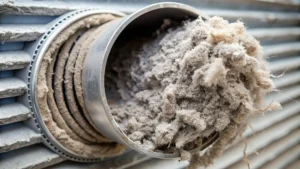
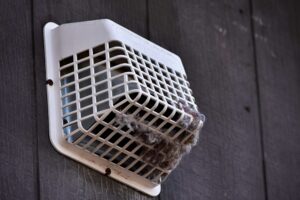
In the price, not an add on. Brushed the full length of the run with a vacuum pulling lint back, and the exterior hood cleared and checked.
Most companies quote this separately. Ours is included specifically so it does not get skipped, because it is the one duct in the house that is a genuine fire risk.
What is not included
Repairs. If we find a crushed duct, a disconnected joint, or a run that was never vented outside correctly, that is a repair and it gets quoted separately, after the fact, with no pressure to use us.
Exhaust vents are not in it either. Kitchen and bathroom exhaust is its own service with its own equipment, and we would rather name it here than let you assume.
Also not included: a second HVAC system. If your home runs two, that is two cleans, and you hear it while booking.
Where restrictions apply
There are restrictions on this offer, and there are two of them: mold and rust.
Both are about the condition of the system rather than the size of the house, and neither is a cleaning problem. A system with active mold needs remediation. Corroded ductwork usually needs replacing. Pretending a standard clean solves either would be exactly the kind of thing this page exists to argue against.
If we find one, you get shown it on camera and told plainly what it would take. No quote on the spot.
What you get at the end
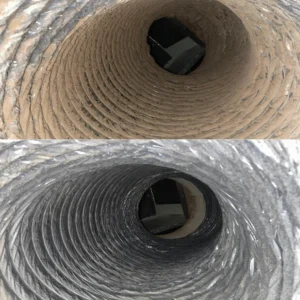
Footage from inside the ducts before and after, so the parts of the job you could not watch are still something you can check.
How to use this list
Take it to whoever else you are considering and read it out. Supply ducts, returns, registers, air handler, blower, coil, dryer vent. Ask which of those are in their price.
You will find out quickly whether you are comparing two quotes for the same job or two quotes for different jobs that happen to share a name.
Booking
Call or text for an arrival window. Nothing is due up front, and if you are not satisfied with the work you do not pay for it.
Why the air handler is the one that separates quotes
If you compare two duct cleaning prices and cannot work out why one is four times the other, this is almost always where the difference lives.
Cleaning duct runs is relatively quick. Opening the air handler, cleaning the blower wheel properly and getting at the coil is the slow, awkward part of the day, and it is the part that requires the cabinet to be opened and put back correctly. A price that cannot absorb an extra hour in a hot attic is a price that is not including it.
So when you are comparing, do not compare the headline figure. Compare whether the air handler is inside it.
What a loaded blower wheel actually does
Each blade on the wheel is shaped to grab air. When a layer of dust packs onto the blades, the shape changes and the wheel moves less air while the motor draws the same power.
You do not notice because it happens over years. The rooms furthest from the unit get weaker, the system runs longer to reach the thermostat setting, and everybody blames the age of the unit. Sometimes that is correct. Often the wheel is just carrying a quarter inch of felt.
Why we say accessible coil
Because honesty here matters more than a cleaner marketing line.
Some evaporator coils are installed with a proper service panel and come apart easily. Others were sealed into the cabinet during installation with no access, and getting to them means cutting metal, which is a modification to your system and not something that belongs inside a cleaning price.
If yours is one of those, you will be told and shown why, rather than charged for a surface the brush never reached.
The registers are your receipt
Of everything on the list, the registers are the only part you can inspect yourself without equipment.
Pull one off a week after any company has been, from a room nobody thinks about, and look at the first foot of duct behind it. That single check tells you most of what you need to know about whether a cleaning was real. It is also why we pull every cover rather than wiping the visible face.
What the full list costs
All of it, on one HVAC system, is four hundred and ninety nine dollars. Nothing is due up front, and if you are not satisfied when you look at the result, you do not pay.
If your home runs two systems, that is two cleans, and you hear it on the phone while booking rather than from a technician in your laundry room.
What dirty looks like at each point
In the supply runs, a settled gray layer along the bottom of the duct. In the returns, something more like felt, often with pet hair worked into it. On the blower wheel, a packed coating on each blade that holds its shape when you touch it.
In the dryer run, lint, compressed hardest at the bends. At the coil, a mat across the face of the fins that you can see light struggling through.
Knowing what each one looks like is useful, because it means you can judge the footage yourself instead of taking a verdict from whoever filmed it.
What a house that does not need this looks like
Light, even dust in the supply runs. Returns that look used but not loaded. A blower wheel where the blade shape is still obvious.
If that is your system, we will tell you, and the visit ends without an invoice. Duct cleaning is not an annual service and we are not going to pretend otherwise to fill a schedule.
Why the list is fixed
Because a flat price only protects you if the scope cannot shrink. A fixed number attached to a vague scope is not a guarantee of anything, it is just a number that will be defended later by narrowing what it covered.
So the list is written down, it is the same list in every house, and the only thing that changes it is a second HVAC system, which you hear about while booking.
Why we list it this precisely
Because vagueness is where the money hides in this trade. Whole house duct cleaning is a phrase, not a scope, and two companies can both use it honestly while delivering jobs that differ by three hours of work.
Naming seven components and sticking to them means you can hold us to something specific. It also means that if we ever quietly dropped one, you would notice, which is the correct amount of pressure for a customer to have.
The one question that settles any comparison
Ask the other company to confirm, item by item, which of the seven they include at their price. Not whether they clean the whole house. The seven.
You will usually get a straight answer, and whichever way it goes you will be making a real comparison for the first time. If their list matches ours and the price is lower, that is a genuinely better deal and you should take it.
If you only check one thing
Check the returns. They are the least glamorous item on the list, the easiest to leave off a quote without anyone noticing, and the place where the most material actually collects in a Phoenix house.
A cleaning that covers the supply runs and skips the returns has cleaned the half of the system carrying air you already conditioned, and left the half pulling dust out of your living room.
This much scope, at this price, is unmatched
Seven components. Every one brushed, vacuumed and disinfected. One flat $499.
Take that list to anybody else and price it item by item. You will not land near this number for the same work, which is the whole reason the offer exists.
The Unmatched $499 Complete-System Clean
One HVAC system. Ducts, returns, registers, air handler, blower, coil and dryer vent. Every component brushed, vacuumed and disinfected. Nothing due up front, and we do not accept payment from unhappy customers.